

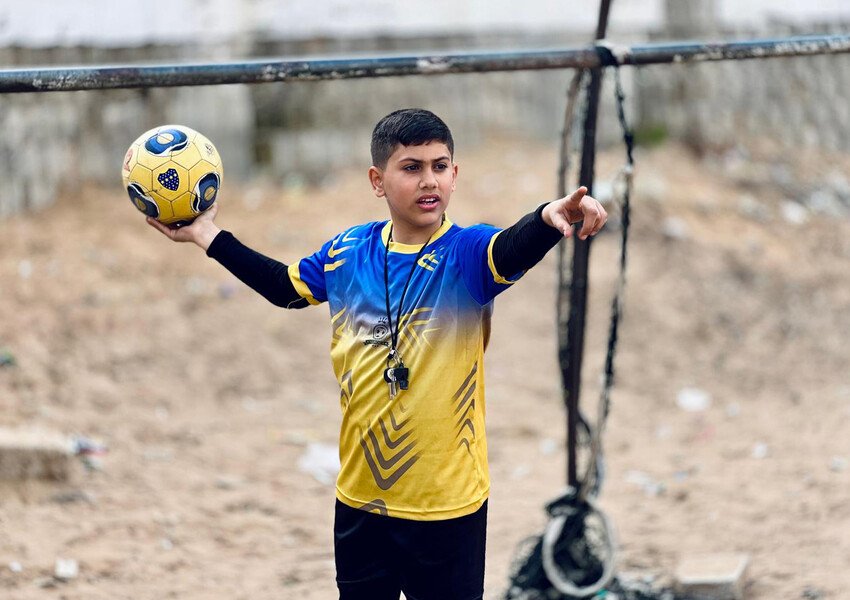
Caring for young minds must be a priority in war.
Playgrounds, schools, learning, art, theatre and recreational activities are key to healing.
“Every night we wonder if we will wake up tomorrow,”. I will never forget the words spoken to
me by Abdul, a 16-year-old boy in the war-ton city of Mazar-e-Sharif, Afghanistan, several years ago.
Today, his sentiment resonates for hundreds of thousands of children across Iran and the wider Middle East. In just two weeks of brutal violence, many lives have been lost, including schoolgirls in Iran. Children and families throughout the Middle East now live under the constant shadow of anxiety, fear and uncertainty.
This is what war truly means. It is not about the strategies drawn up by generals in distant war rooms. It is the simple, terrifying question children carry each night: Will morning come?
Wars are visible. Their scars are not.
When we think of conflict, we imagine battlefields, shattered buildings and bloodshed. Yet the deepest impact often lies far beyond the frontlines— in the fragile minds of children and communities, and even among those who witness the suffering from afar.
One truth I have learned while working with children in war zones is this: everyone is affected by war, but not in the same way. Children and women are often the most vulnerable.
Battlefields are not the only places where wars are fought. Often, the deepest turmoil unfolds silently in the minds of children. Childhood is often the first casualty of war.
How War Impacts Children’s Mental Health
At a temporary reception centre on the Ukraine–Romania border during the early days of the war in Ukraine, I met seven-year-old Anna, a Ukrainian refugee child. Her mother told me
that Anna had stopped talking after witnessing explosions in her hometown of Odessa.
The silence of a child can reflect deep trauma. War may begin on battlefields, but its deepest effects travel much further — into classrooms, homes and memories.
During a humanitarian mission to Adré, the border town between Chad and Sudan, I met
Sudanese refugee children who were exhausted, hungry and dehydrated. They had spent
months fleeing bombing zones, unsure whether their families would survive. They too
wondered if they would live to see another day. For children living inside war zones, the
experience is relentless. Children in Gaza once told me that the constant buzzing of drones
was the main reason they could not sleep. In Syria, shelling kept children awake through the
night for months. Sleep, safety and routine — the foundations of childhood — slowly
disappear.
Some of the deepest wounds are carried by girls and women. During a humanitarian mission
to the Democratic Republic of the Congo, girls and women told me about the devastating
impact of rape and sexual violence used as a weapon of war. The small women’s
cooperative they had formed helped restore confidence and dignity — two essential ingredients for emotional recovery. Sphere Handbook, the reference guide for every humanitarian worker, places dignity as a fundamental building block of emergency relief efforts.
War’s psychological scars often surface years later. Young people I met in Rwanda said they
had witnessed extreme forms of violence as children. For years they believed they had
forgotten it. But during adolescence, memories resurfaced through conversations in their
communities.
In Afghanistan, once one of the most heavily land-mined countries in the world, many
children have lost limbs. For them, the fear of war carried another layer of terror. When
bombing begins, they know they cannot run as fast as others.
These children were some of the most inspiring I have come across in my life while working
in war torn areas- they had even formed a local football team of landmine survivors. Some of
them taught me how to fly kites and explained the spirit behind them- that is they raise
against the winds.
Caring for the mind must start from day one. Left unattended, childhood trauma in war does
not fade—shaping lives, communities, and the prospects for peace. Playgrounds, schools, learning, art, theatre and recreational activities are key to healing.
War Beyond Witnessing: The Burden of Listening
In today’s interconnected world, the psychological impact of war travels even further,
beyond battlefields — through phones, social media and relentless news cycles. Images of
bombings, injured children and grieving families reach millions of screens within seconds. A
conflict thousands of kilometres away suddenly feels personal. Someone knows someone
who lives there. Or the images themselves remain etched on our minds.
For many young people, this exposure ignites a powerful sense of injustice. Across the world
we have seen them protest, organise and raise their voices for peace. Young people
mobilise quickly when they see injustice. But when they feel powerless to stop the violence,
that helplessness can slowly turn into anxiety, anger or emotional exhaustion.
Then there are those who carry the burden of listening. Relief workers, teachers, aid
workers, journalists and photographers often absorb the emotional weight of the stories they
hear from survivors. They may not stand on the battlefield, yet they encounter war through
testimonies of loss, fear and survival.
A haunting example often cited is the story of photojournalist Kevin Carter. In 1993, he
captured the now-famous image of a vulture stalking a starving child during the famine in
Sudan. The photograph shocked the world and drew global attention to the crisis. But it also
brought intense criticism about whether he should have helped the child instead of
documenting the moment. The weight of witnessing suffering, combined with public scrutiny,
took a profound toll on his mental health. He would eventually die by suicide.
War may fade from headlines, but its emotional echoes linger — in survivors, in witnesses
and in those who listen.
Ending war is the first step toward healing. Until then, the quiet work of listening with
compassion remains one of the most important forms of care. Listening and providing
Psychological First Aid are the starting points. Scaling up humanitarian assistance is key to
care for the wounded and alleviating suffering.
Caring for the Carers
We must not forget those who try to help. They are human beings first.
During the early months of the Rohingya refugee crisis in Bangladesh, many humanitarian
workers spoke about the overwhelming impact of hearing countless stories of loss and
brutality in such a short time. Listening to such suffering leaves its own wounds — what
psychologists call vicarious trauma— the emotional toll of witnessing the suffering of others.
Stories of suffering impact some listeners strongly.
Aid workers operate under immense pressure: responding to crises, meeting reporting
demands and carrying the emotional weight of the communities they serve. Yet behind every
humanitarian worker or project manager is an ordinary person living under extraordinary
stress.
At the same time, local frontline staff — those from the affected communities themselves —
are often the bravest. They stay when others evacuate. They serve their own neighbours
while coping with the same fear and uncertainty.
Supporting them is essential to protecting our shared humanity. Often, the most humane
response is simple empathy: recognising their courage and limits, easing pressures where
possible and ensuring they are cared for too.
Visible wars may dominate the headlines, but it is the invisible scars that last the longest.
And recognising those scars is the first step toward healing them, along with genuine efforts
to stop wars.
*All names changed to protect identities.
An edited version of this blog appeared on The Week : OPINION | Visible wars, invisible scars: Caring for young minds must be a priority in wars – The Week