

August 19 is World Humanitarian Day: a day of hope, but also of grief.
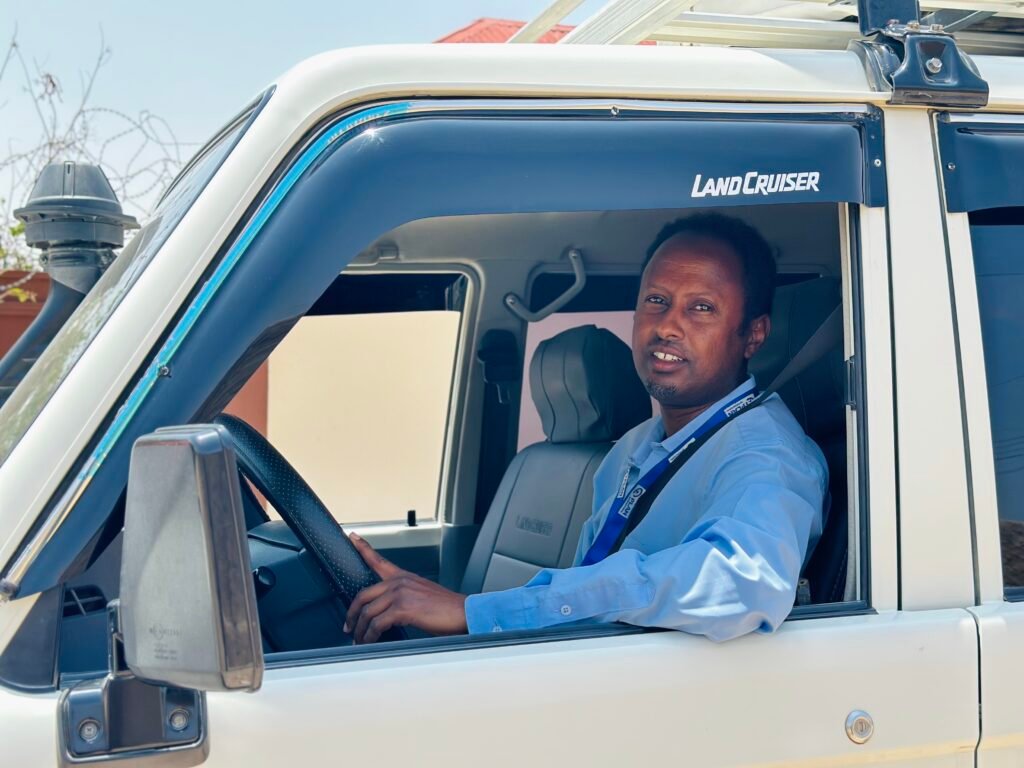
Awil in Somalia. Photo : Muhim Osman, Plan International
It is a day to honour those who enter the world’s darkest places with little more than courage, compassion and an unwavering belief that every life matters. It is also a day to remember those who never came home.
In 2025, at least 326 humanitarian workers were killed across 21 countries while doing their jobs: volunteers running community kitchens in war zones; paramedics, nurses and doctors treating sick and wounded children; teachers creating safe spaces, protection workers defending girls from war violence, engineers repairing water systems, and countless others whose names rarely make the headlines.
The WHO has verified more than 900 attacks on healthcare facilities across the world in 2026 – a rate of more than four attacks a day.
WORLD HUMANITARIAN DAY:
World Humanitarian Day was born from tragedy. On August 19, 2003, a bombing of the UN headquarters in Baghdad killed 22 aid workers, including my mentor, the UN humanitarian Sergio Vieira de Mello. Their deaths highlighted the risks faced by those serving humanity amid war and suffering. In 2008, the UN General Assembly established World Humanitarian Day to honour their sacrifice and call for the protection of civilians and humanitarian workers.
Today, that call is more urgent than ever. Wars are becoming more brutal. Aid access is blocked, hunger, displacement and sexual violence are weaponised, and drones are transforming warfare. Too often, the basic rules of International Humanitarian Law designed to protect civilians are flagrantly ignored.
Yet humanitarian workers continue to show up, bringing food, water and dignity, treating the wounded, or simply sitting beside a frightened child.
TRUE PEOPLE BEHIND CARE AND COURAGE:
Disasters and wars do not necessarily create heroes. They reveal them: the people who roll up their sleeves when the earth shakes, rains and crops fail, missiles strike and the world turns its attention elsewhere.
Courage does not mean being unafraid. It means continuing despite fear. Sometimes, the bravest decision a humanitarian makes is simply keep showing up despite the risks and especially when the challenges feel overwhelming.
Heba, a young humanitarian worker in Gaza, knows the cost of conflict. Orphaned by war herself at a young age, she understands what it means to grow up with loss, fear and the need for someone to understand your emotions and stand beside you.
She is trained as a mental health and psychosocial specialist and her work is rooted in lived experience. Now she works with Juzoor, a humanitarian and health organisation and provides psychological first aid to children and families in Gaza who are affected by wars. Through art therapy, games, theatre and other activities, she helps children express fear, anxiety and grief: experiences that words often fail to capture.
“When I work with war impacted children… I see a part of my own story in them.”
UNSUNG FACES OF HUMANITY:
Sometimes, humanitarian workers are behind the wheel: the people you may never see.
Meet my colleague at Plan International Somalia, Awil. Awil’s journey to be a humanitarian began in an unlikely place: a car garage in Somalia. As a school dropout during the height of the war, young Awil watched relief vehicles arrive with different colours, logos and names. He noticed one thing they shared: the people in them were trying to make life safer and better for people caught in conflict.
At 15, Awil began saving every Somali shilling he could to learn to drive. More than 27 years later, he still transports humanitarian workers and relief supplies across some of Somalia’s toughest terrain. He jokes that the distance he has travelled could take him to the moon and back.
But behind the humour is a remarkable truth. Awil knows exactly what those roads demand. He drives through sand dunes, bushes and places without mobile coverage, taking people and supplies far beyond distribution centres—and far from the world’s attention.
I remember a journey I took with Awil and my colleagues in Somalia a couple of years ago. Rains had failed for five consecutive years. No words can truly capture the death and devastation prolonged droughts leave behind.
After hours on broken roads, our phones suddenly reconnected. A fitness app congratulated us on completing 10,000 steps. None of us had walked even 500. The bumpy journey had fooled the phone.
He is often the first one to reach the office, much before others arrive, and get ready for a road trip. He is often the last to go home. There is rarely a dramatic photograph of a driver saving a life. Yet without drivers like Awil, doctors may not reach patients, engineers may not repair water points, and food may not reach hungry families.
Awil is an often unseen link in the humanitarian chain, but one that is essential to keep it moving.
Humanitarian work is often ordinary people doing extraordinary things, day after day, without applause.
RELIEF IS ABOUT DIGNITY:
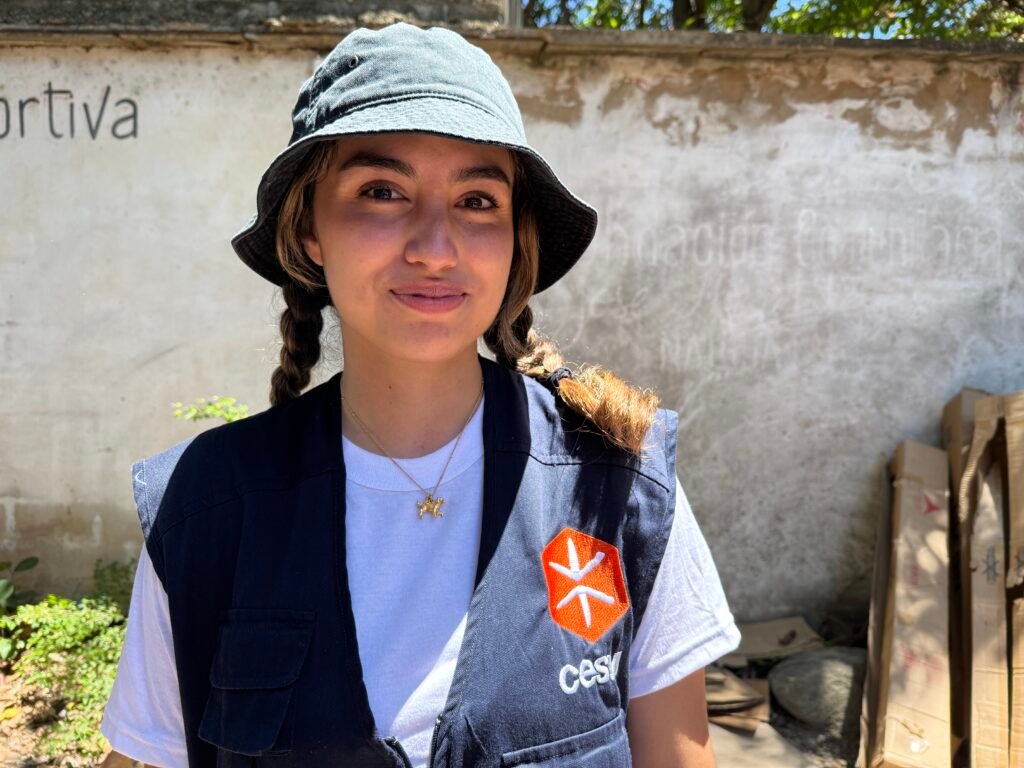
Lorena in Venezuela. Photo Unni Krishnan
Lorena, in Venezuela, offers another reminder that humanitarian workers are not made of steel. Lorena works as a protection manager with CESVI, a humanitarian organisation that promoted dignity of vulnerable people. She works to make laws and justice systems accessible to refugees, migrants, children and other vulnerable people.
I met Lorena in early July, at a relief distribution centre organised by Plan International and CESVI in La Guaira, one of the worst earthquakes impacted areas.
When two major earthquakes struck Venezuela in June this year, Lorena experienced the terror herself. In Caracas, she watched buildings shake and collapse. Her first thought was simple and human: “I am going to die.” She survived.
But when the immediate terror passed, her thoughts turned to children and others who might need help. That instinct –to think of someone else while still processing your own fear –is at the heart of humanitarianism.
Humanitarian work is not only about survival. It is about dignity—reminding people who have lost almost everything that they have not lost their worth.
“Rights and relief should go hand in hand,” Lorena says. She is right.
Caring of carers is essential. Humanitarians witness destroyed homes, terrified children, death and displacement—and carry those memories home. Lorena found strength in her family, friends and her two dogs, Kay and Catalina, as she coped with the fear left by the earthquakes.
FIRST STEP TO DEFEND HUMANITY:
Attacks on humanitarian workers are not an unfortunate consequence of war. They are violations of International Humanitarian Law and, in many cases may constitute as war crimes. Volunteers, firefighters, nurses, doctors, teachers and aid workers must never be targeted, kidnapped, shot or bombed because they are helping others.
The burden falls particularly heavily on local humanitarian workers, who make up the overwhelming majority of those killed. Yet their deaths often receive far less attention than those of international colleagues. This inequality should trouble us all.
Every humanitarian killed is more than a statistic. Someone waits for them to come home. Someone knows their laugh, remembers their kindness and grieves their absence.
That is why World Humanitarian Day matters. It asks us to see the people behind the numbers, and to protect those who protect others.
#ActForHumanity must mean more than a slogan. It must mean protecting civilians, defending humanitarian access and ensuring local volunteers can do their work safely.
The world is hurting. But as Heba, Awil, Lorena and other humanitarians are willing to enter the darkness carrying compassion, humanity has not disappeared.
Defending humanitarians is a critical step to defending humanity.